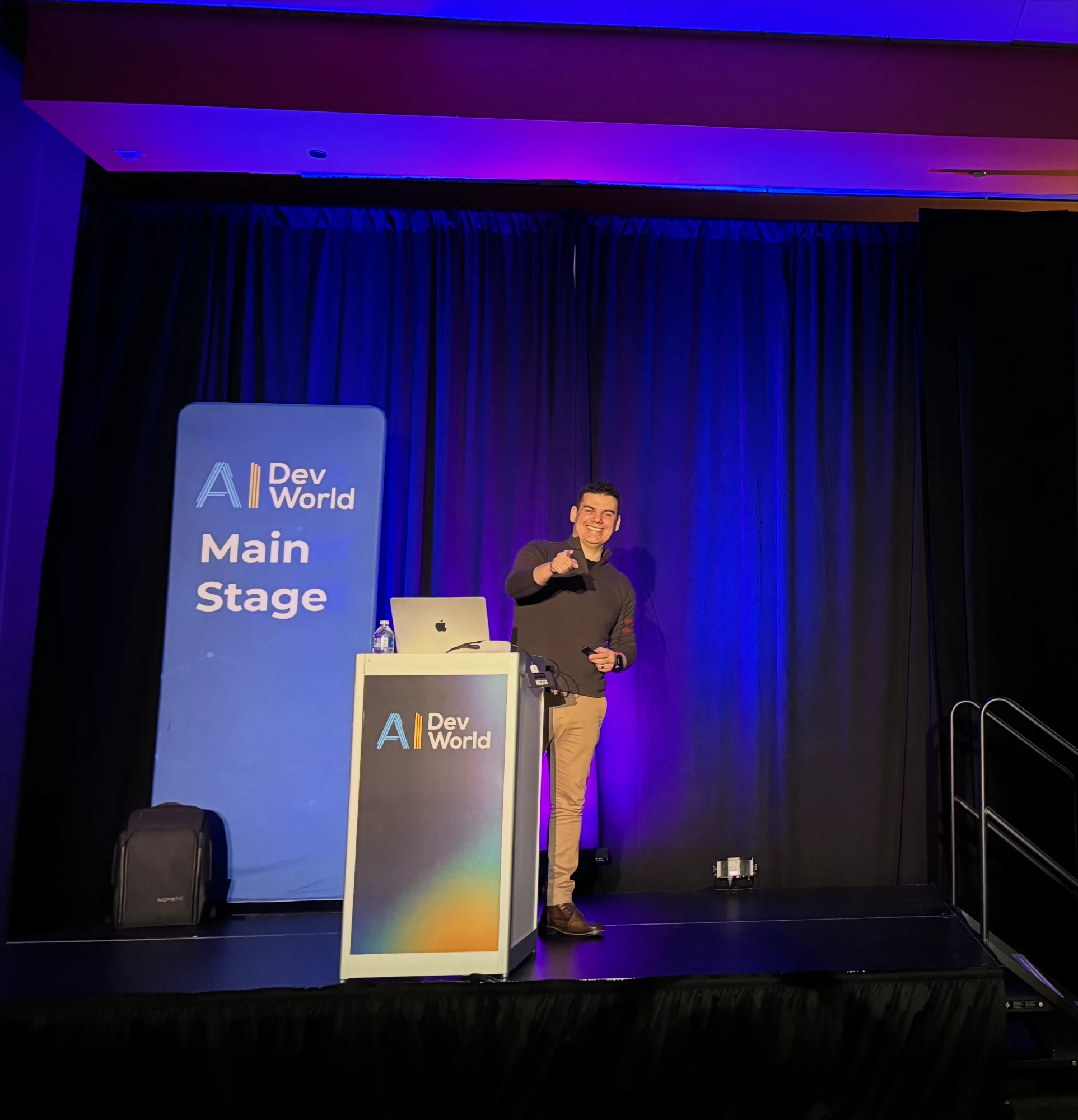
#1 Apache Kafka Meetup in São Paulo/Brazil

Tuesday, Dec 11, 2018

During the week of Dec 2th I had the pleasure of visiting São Paulo/Brazil, a place that I once called home. It has been almost 5 years that I left that city to live abroad – and every time I go there its inevitable not to miss certain things.

I went down there to participate of the Google Cloud Summit event, and make sure that developers using GCP would be aware of Confluent’s Apache Kafka as a service know as Confluent Cloud. It was amazing to share this information with them, since most of them was working (or planning to work) with huge amounts of data in the Cloud and Kafka is certainly the right way to do it.

Ricardo Ferreira
3 minute read

Confluent Cloud Tools is Alive

Friday, Nov 9, 2018

It gives me great pleasure to announce that Confluent Cloud Tools is officially released as a Confluent’s repository. The link to this repository is:

https://github.com/confluentinc/ccloud-tools

In a nutshell, the aim of this project is to allow developers to unfold the true agility that Confluent Cloud can provide –allowing them to focus on writing code instead of wasting time with manual and tedious configuration steps.

Very often developers use tools from Confluent such as Schema Registry, REST Proxy, Connect, KSQL and Control Center – along with their Kafka clusters. This may work fine when they are working On-Premise and making use of the integrated experience that Confluent Platform provides – whether if it is running Confluent Platform locally and managing things via the CLI or; if it is by using the built-in Docker containers.

Ricardo Ferreira
2 minute read

ThinkPad Thunderbolt 3 Dock | Suspend Problem

Thursday, Oct 11, 2018

As mentioned in this post; I have acquired a new laptop from Lenovo, the ThinkPad X1 Extreme. Since I will be working from home sometimes, I thought it would be a good idea to buy an dock station for it.

So I decided to buy the following dock station:

ThinkPad Thunderbolt 3 Dock

It is a nice dock station solution, especially because it connects everything to the laptop via Thunderbolt 3. However; since I am running Fedora in my laptop, things couldn’t be that easy right?

Ricardo Ferreira
2 minute read

Getting Myself Certified in AWS

Wednesday, Aug 29, 2018

August 2018 was a very productive month to me, where after some intense dog hours studying like crazy and practicing a lot - I was able to get certified in two of the most interesting AWS exams: Solutions Architect and Developer Associate.

That was quite of a challenge to me, because my Cloud background had been up to that point mainly focused on Oracle Cloud. It was interesting to see the differences between the two Cloud vendors, as well as seeing how AWS structures its services. Which BTW is amazing.

Ricardo Ferreira
1 minute read

© 2018 - 2026 Ricardo Ferreira

Search is powered by Pagefind. Just hit CTRL+K or CMD+K to start searching.

Powered by Hugo with Dream and Devrel themes.

Open Source

I contribute to LangChain4j, an idiomatic open source Java library for building LLM-powered applications on the JVM. Recent work includes adding native vector search embedding stores so developers can build RAG, recommendation engines, and AI memory systems.

I also ported RedisVL to Go, an open source, AI-native client that brings vector search, semantic caching, LLM memory, semantic routing, rerankers, and an MCP server to the Redis ecosystem for Golang developers.

Speaking

I’ve been speaking at conferences since 2008 and doing it full time as part of my work with DevRel since 2018. Some of the events I’ve spoken at include AWS re:Invent, Microsoft Ignite, Google Cloud Next, KubeCon, Oracle OpenWorld, QCon, Strange Loop, Kafka Summit, Pulsar Summit, JavaOne, DevNexus, JFokus, JNation, and All Things Open.

You can find recordings of my talks live on my YouTube channel, and the code I write for talks, demos, and tutorials is on my GitHub.

Who am I?

I work at the intersection of distributed systems, AI, and data infrastructure, turning complex technology into things developers can understand, adopt, and build with.

Lately, that means hands-on AI engineering: building vector search, semantic caching, agent memory, and RAG into the data layer, and figuring out how to make AI agents secure enough to ship. I also contribute to open-source projects like LangChain4j and RedisVL for Golang.

The AI-native work isn’t a pivot. It draws on the same systems-design foundation I’ve built for 20+ years: designing data systems for scale, moving data fast, watching where systems break; now applied to vectors and agents. I have worked on RDBMS and Big Data at Oracle; event streaming with Apache Kafka and Flink at Confluent; observability at Elastic; AI and developer tooling at AWS; and NoSQL and vector stores at Redis. That foundation is exactly what separates AI demos that work on stage from AI systems that survive production.

Social Links