
Getting Myself Certified in AWS

Wednesday, Aug 29, 2018 | 1 minute read

Ricardo Ferreira

August 2018 was a very productive month to me, where after some intense dog hours studying like crazy and practicing a lot - I was able to get certified in two of the most interesting AWS exams: Solutions Architect and Developer Associate.
That was quite of a challenge to me, because my Cloud background had been up to that point mainly focused on Oracle Cloud. It was interesting to see the differences between the two Cloud vendors, as well as seeing how AWS structures its services. Which BTW is amazing.

I certainly look forward to continue my certification path, so I can eventually try the professional ones. But these two certifications helped me to have a more in-depth understanding of how to discuss infrastructure and development on top of AWS.

Time to celebrate 🍺
© 2018 - 2026 Ricardo Ferreira

Search is powered by Pagefind. Just hit CTRL+K or CMD+K to start searching.

Powered by Hugo with Dream and Devrel themes.

Open Source

I contribute to LangChain4j, an idiomatic open source Java library for building LLM-powered applications on the JVM. Recent work includes adding native vector search embedding stores so developers can build RAG, recommendation engines, and AI memory systems.

I also ported RedisVL to Go, an open source, AI-native client that brings vector search, semantic caching, LLM memory, semantic routing, rerankers, and an MCP server to the Redis ecosystem for Golang developers.

Speaking

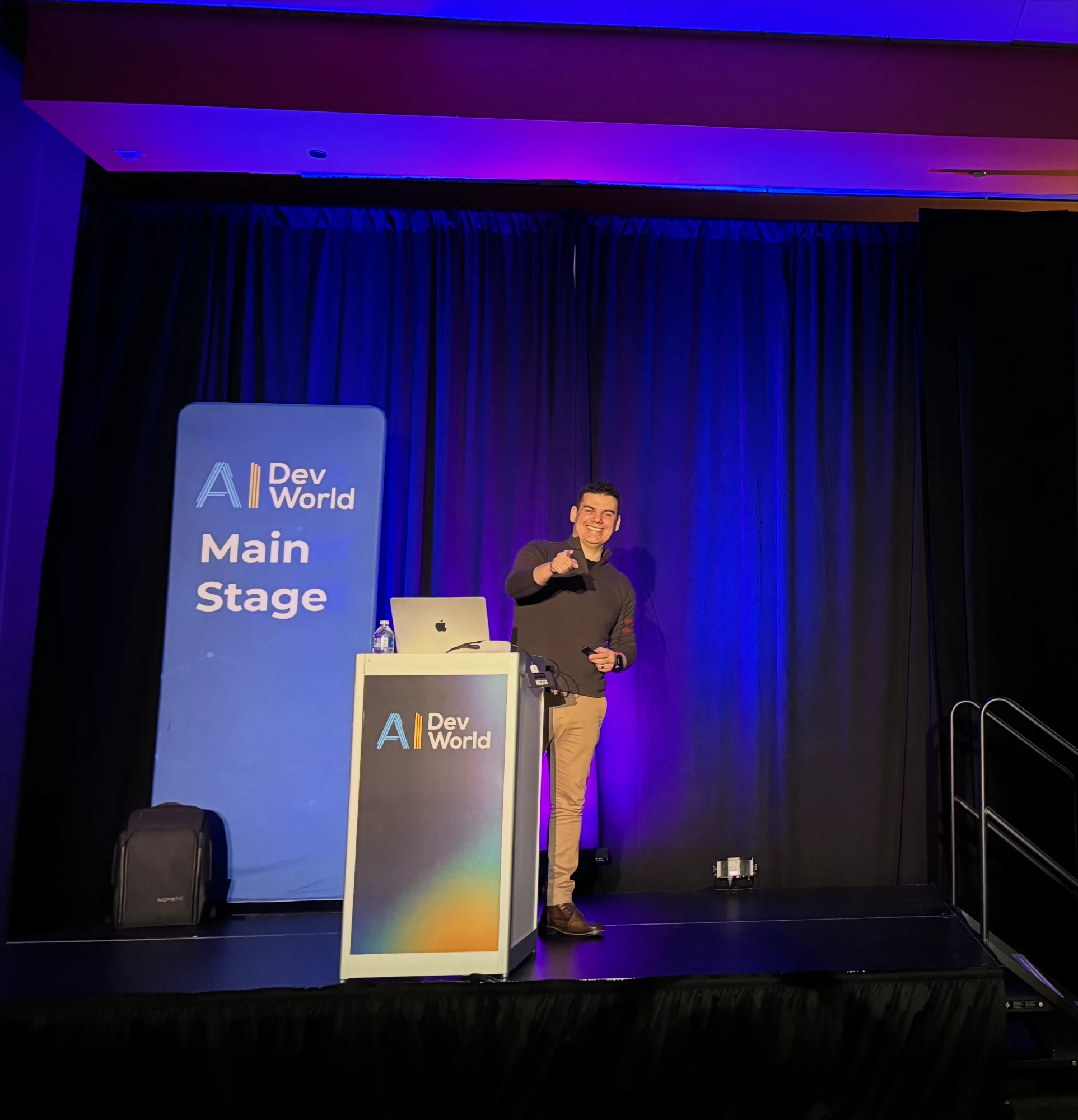
I’ve been speaking at conferences since 2008 and doing it full time as part of my work since 2018. Some of the events I’ve spoken at include AWS re:Invent, Microsoft Ignite, Google Cloud Next, KubeCon, Oracle OpenWorld, QCon, Strange Loop, Kafka Summit, Pulsar Summit, JavaOne, DevNexus, JFokus, JNation, and All Things Open.

Recordings of my talks live on my YouTube channel, and the code I write for talks, demos, and tutorials is on my GitHub.

Who am I?

I work at the intersection of distributed systems, AI, and data infrastructure, turning complex technology into things developers can understand, adopt, and build with.

Lately, that means hands-on AI engineering: building vector search, semantic caching, agent memory, and RAG into the data layer; contributing to LangChain4j and RedisVL for Golang; and figuring out how to make AI agents secure enough to ship.

The AI-native work isn’t a pivot. It draws on the same systems-design foundation I’ve built for 20+ years, moving data fast, at scale, close to compute, watching where systems break; now applied to vectors and agents. I have worked on event streaming with Apache Kafka and Flink at AWS and Confluent; observability at Elastic; as well as RDBMS, NoSQL, and Big Data at Oracle. That foundation is exactly what separates AI demos that work on stage from AI systems that survive production.

Social Links